Leveling Your Valley Structures Building
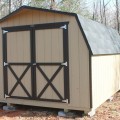
Leveling Your Valley Structures Building
Leveling your Valley Structures storage building begins as we offload the storage shed onto 4 – 4 x 8 x 16 cap blocks, one at each end of the outside skids. We then place the level on the floor inside the Valley Structures building. We use a jack, sometimes two jacks, to raise the shed until it is level side to side with the highest of the initial 4 blocks.
Using a shovel, we level off the spots where we place the blocks at the base of each pier. We use only as many blocks as are necessary to level with the highest point. Next, we adjust the level to check for front-to-back leveling and adjust the block in the piers as required to ensure that the Valley Structures building is level both side to side and front to back.
Support Points Based on Building Size
The size of your Valley Structure building determines the number of points we support. The general “rule of thumb” is to place supports every 6 to 8’ along the outside skids and at the ends of the inside skids. But, this rule may be altered by how you intend to use the storage shed, such as a shop with heavy equipment versus general storage.
Choosing the Right Blocks
Please speak with our staff, and we will ensure it’s level to suit your specific usage. We use the following types of blocks to level your building: 2”, 3”, and 4” cap blocks, and 8” open web blocks. A 4” cap block is used at the base of each support pier. We never use an 8” open web as the base block, as it tends to sink more quickly.
Fine-Tuning the Level
Once the shed is less than 2” out of level, we use pressure-treated decking and Cedar shims to fine-tune the leveling. These materials can withstand the elements.
When you think of roofing, a shell of framed timber probably comes to mind. But there’s also an array of hardware involved in supporting your structure’s roof. Ties and hangers are crucial components, usually made of steel, that are made to resist tension. Let’s a take a look at some varieties.
Rafter Ties
Rafter ties hold together the bottoms of opposing roof rafters to keep the walls from spreading apart.
Joist Hangers
Joist hangers strengthen a load-bearing connection. These components come in many sizes, dictated by the size of the beam. Experts will agree that using the proper nails—and proper amount of nails—affect the integrity of the installation.
Hurricane Ties
Hurricane ties are often used in homes in areas prone to severe windy weather. So, if your residential or commercial buildings need hurricane ties, then you should also consider them for your outdoor structures. Nail hurricane ties are to the bottom of a rafter or truss and connect to the wall plate to prevent the uplifting of trusses.
Seismic Ties
Like hurricane ties, seismic ties help hold things together—literally—when things shake up. Regions impacted by earthquakes use seismic ties to secure items to walls. For example: machinery, appliances, desks, filing cabinets or shelving.